
Why Is My Neck Always Hurting? A Clinician’s Perspective on Long-Term Relief

Updated: Feb 21

Last week, a 32-year-old software engineer walked into my clinic. She looked tired. She held her neck gently with one hand as if afraid to move it.
"Doctor, I cannot turn my head properly. My neck is always hurting. I wake up with stiffness. I feel anxious because the pain keeps coming back.
Her scans were almost normal. Mild muscle spasm. No major disc problem. Yet her pain was real. Her fear was real. Her sleep was disturbed. Her work was affected.
This is not a rare story. I see this almost every other day of the week.
Neck pain is becoming one of the most common problems in young adults, office workers, school-going students and even teenagers. It affects about 10-20% of young adults, with women as most affected.
Let us understand why.
Why Does Neck Pain Happen

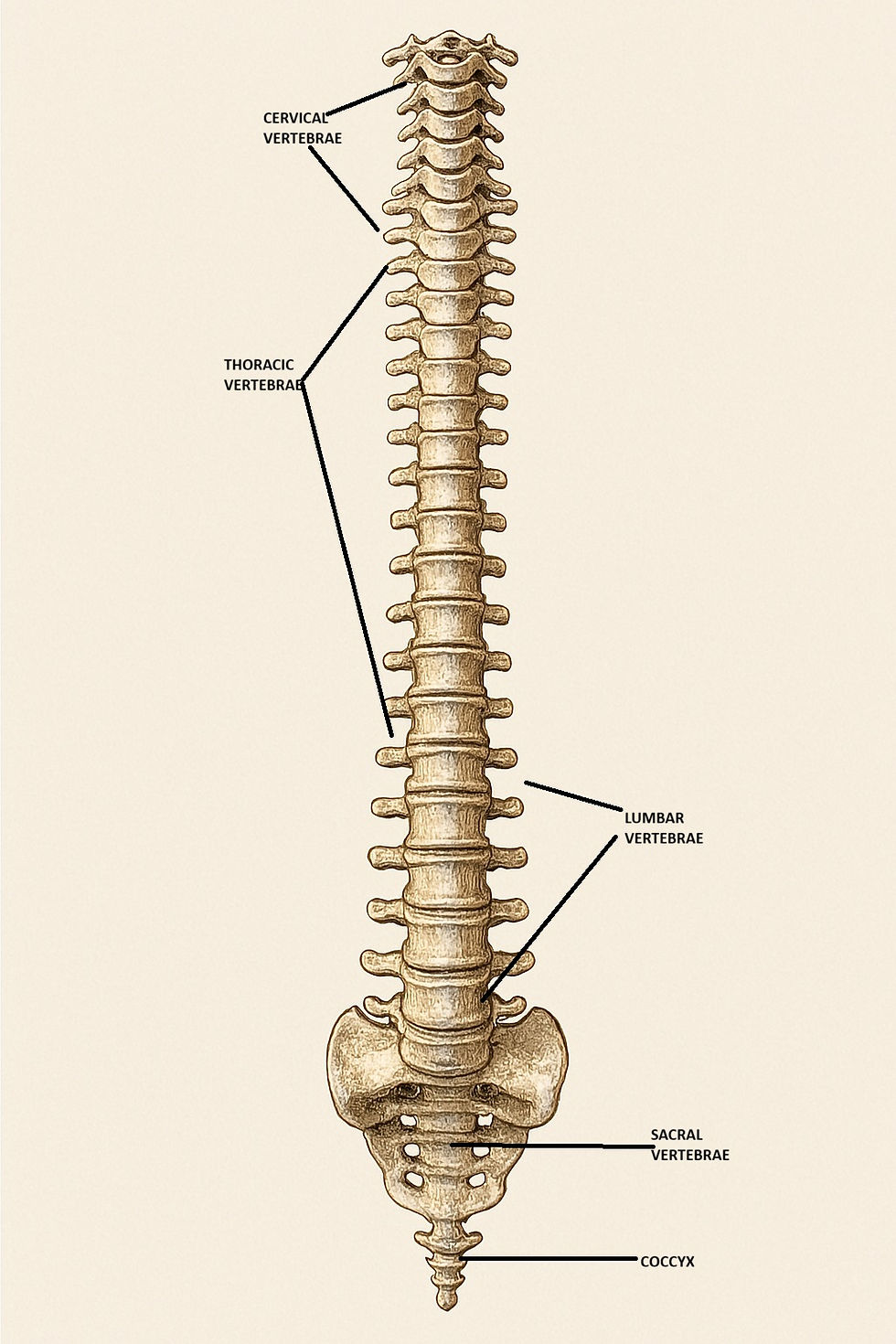
Your neck carries the weight of your head all day. The human head weighs around 4 to 5 kilograms. Of the 33 vertebrae we have, the 7 cervical vertebrae are most delicate, and our heavy head is supported well. When you bend forward to look at your phone, the pressure on your neck increases several times.
The most widely cited figures come from a 2014 study by spine surgeon Dr Kenneth Hansraj (published in Surgical Technology International), which used biomechanical modelling to estimate these loads:
Neutral position (0° tilt): ~10–12 pounds
15° forward tilt: ~27 pounds
30° forward tilt: ~40 pounds
45° forward tilt: ~49–50 pounds (often described as feeling like holding a ~50-pound bag of potatoes)
60° forward tilt: ~60 pounds
Common reasons I see in my practice include:
• Long hours on laptop and mobile
• Poor posture while sitting or sleeping
• Sudden jerky movements
• Stress and anxiety
• Muscle strain due to injury
• Cervical spondylosis
• Disc bulge or nerve compression
• Cervical Rib
Many people think neck pain only happens due to bone problems. That is not true.
In most young patients, it is muscle tightness and stress-related tension. When you are anxious, your shoulders tighten. The neck muscles become stiff. Blood flow reduces. Pain increases. Then fear increases. This creates a vicious cycle.
Pain leads to anxiety. Anxiety increases muscle tension. Muscle tension increases pain.
Medical Reasons Behind Neck Pain
From a medical perspective, neck pain can be due to:
Muscle strain
Ligament sprain (whiplash effect)
Cervical spondylosis
Disc prolapse
Nerve compression
Vitamin deficiencies
Cervical Rib
If the pain travels to the arms, and causes tingling, numbness, or weakness, it needs proper medical evaluation. Weakness and numbness in the arm and hands can also follow, which is known as cervical radiculopathy.
But many patients with chronic neck pain do not have severe structural damage. They have chronic inflammation, muscle spasm and lifestyle-related strain. This is where long-term healing becomes important.
Why People Are Turning to Ayurveda for Long-Term Solutions?

In my clinic, many patients say the same thing.
Doctor, painkillers help for a few days. Then it comes back.
Painkillers reduce symptoms. They do not always correct posture, muscle stiffness, poor digestion, sleep issues or stress.
Understanding Vata Imbalance
Ayurveda looks at neck pain as a Vata imbalance. Excess dryness, strain, irregular routines and stress aggravate Vata in the body. This leads to stiffness and pain on movement.
Instead of only suppressing pain, we focus on:
• Improving muscle nourishment
• Reducing inflammation naturally
• Correcting posture habits
• Managing stress
• Improving sleep quality
This is why people seek Ayurveda for long-term relief.
Simple Techniques I Suggest to My Patients
These are safe and simple practices that help many people.

1. Gentle Neck Exercises
Do these slowly. Never force.
• Neck rotation in slow circles• Chin to chest stretch• Ear to shoulder stretch• Shoulder shrugs
Repeat 5 to 10 times twice daily.
Movement improves blood circulation and reduces stiffness.
2. Warm Oil Massage

Daily gentle massage with warm sesame oil or medicated oils helps relax muscles.
In clinical settings, we use therapies like:
• Greeva Abhyanga, which is focused on neck massage
• Kizhi which is warm herbal poultice therapy that reduces stiffness and improves circulation.
Kizhi is especially helpful in chronic muscle tightness.

3. Posture Awareness
I always tell my patients one simple rule.
Your phone should be at eye level. Your eyes should not go down to your phone.
Keep your back straight. Support your lower back while sitting. Avoid very high pillows.

4. Simple Herbs That Help
Under proper guidance, some commonly used herbs include:
• Ashwagandha for muscle strength and stress reduction
• Shallaki for inflammation
• Moringa oil or Castor oil packs
• Turmeric for natural anti-inflammatory support.
• Ginger is a good digestive and natural painkiller.
Never self-medicate for long periods. Always consult a qualified practitioner.
The Emotional Side of Neck Pain
Chronic neck pain is not just physical.
It creates fear. What if it becomes permanent? It disturbs sleep. It affects work productivity. It reduces confidence.
Many patients become anxious because pain keeps returning.
Healing requires reassurance. It requires patience. It requires correcting daily habits.
Neck pain rarely improves by ignoring it.
But the good news is this.
With proper guidance, posture correction, stress management, therapeutic massage and internal support, most people experience significant relief.
Final Thoughts from My Clinic
If you have neck pain, do not panic. Do not depend only on painkillers. Do not ignore persistent symptoms.
Listen to your body.
Neck pain is often your body’s way of saying slow down, correct your posture, manage your stress, nourish your muscles.
When we treat the root cause and not just the symptom, healing becomes long-lasting.
3 Most Common FAQs
Q1. What is the most common cause of neck pain?
A. The most common cause is muscle strain due to poor posture, long screen time and stress. In some cases, cervical spondylosis or disc issues may be responsible.
Q2. Can Ayurveda cure chronic neck pain?
Ayurveda focuses on reducing inflammation, improving muscle strength and correcting lifestyle habits. Many patients experience long-term relief when therapies and herbs are taken under proper supervision.
Q3. Is Kizhi therapy effective for cervical pain?
Yes. Kizhi is a warm herbal poultice therapy that improves blood circulation, reduces stiffness and helps relieve chronic neck muscle tension.
In whatever type of neck pain you have, it is always advisable to seek a qualified medical professional or doctor, as neck muscles are very sensitive and delicate; untrained and unqualified masseurs can deteriorate your condition.


Comments